This article is made possible through Spotlight PA’s partnership with NOTUS, a nonpartisan news organization that covers government and politics with the fresh eyes of early career journalists and the expertise of veteran reporters.
Senators from both parties are hoping that the Department of Homeland Security’s approach to acquiring and converting warehouses into large-scale detention centers will change under new leadership.
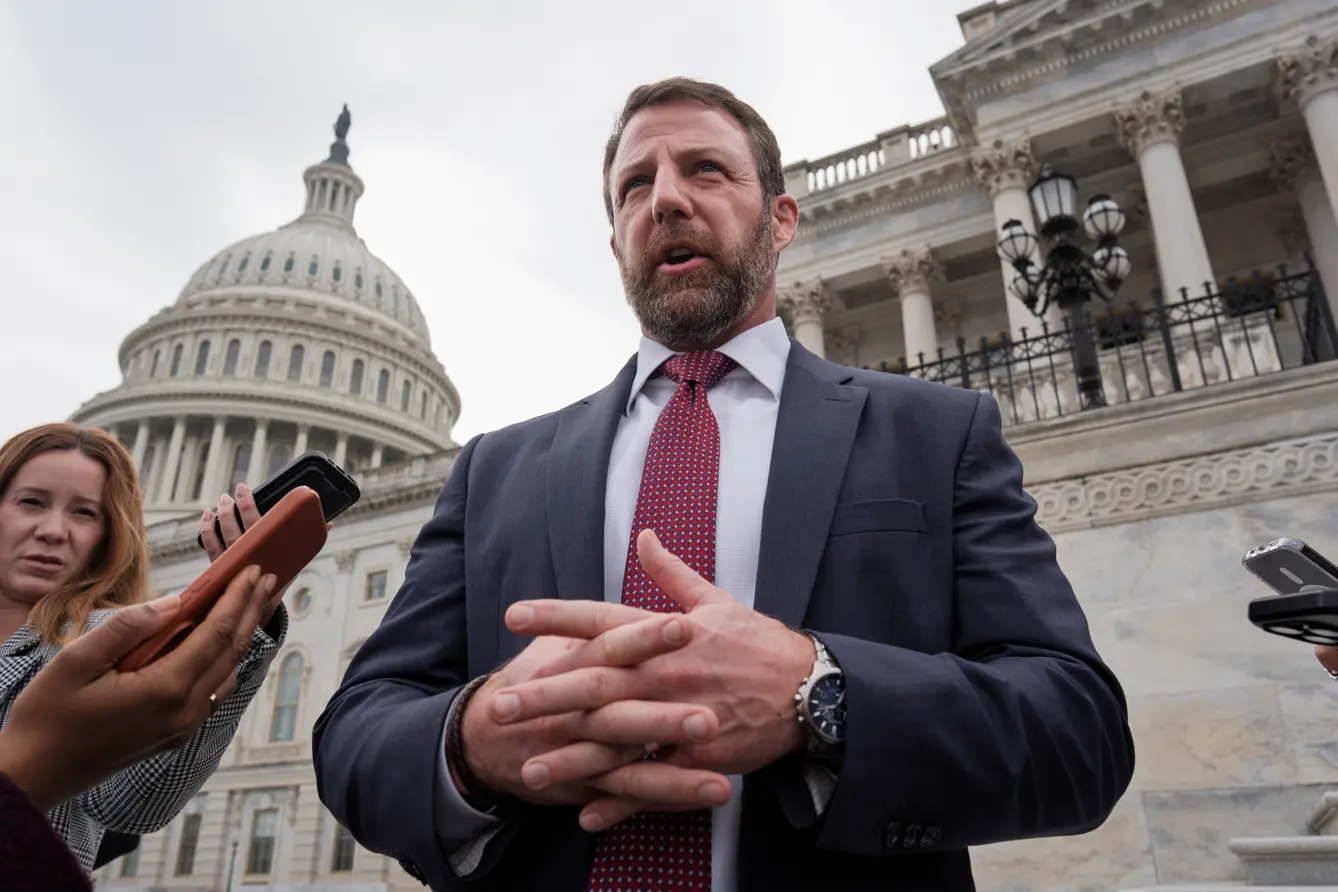
As Sen. Markwayne Mullin of Oklahoma begins this week the nomination process to replace Kristi Noem as DHS secretary, he’ll face questions about how he would approach enacting President Donald Trump’s immigration agenda. And the proliferation of warehouses-turned-detention centers across the country has caused concern among officials from both parties, at times prompting them to step in.
“I’m looking for a more deliberative process that works with state and local governments to look at opportunities,” Sen. Roger Wicker of Mississippi said of DHS’s purchase of warehouses for use as detention centers.
The Republican senator successfully convinced Noem to reverse course on a planned site in his state, which had been slated to hold 8,500 beds. That’s part of a broader pattern of Republican leaders pushing back on plans to convert warehouses into detention centers, where they’ve had mixed success. Facing backlash over lack of transparency, little community input, and possible environmental impact, some Republican lawmakers have found themselves caught between their push for mass deportations and the reality of their home states.
Sen. Thom Tillis, a Republican from North Carolina and a critic of Noem, told NOTUS that when it comes to the warehouse plan, he hopes that Mullin reviews how the department pays for facilities. DHS has been paying high premiums for the warehouses, often much higher than the facilities’ appraisal values.
“I don’t know if you’ve seen some of the premiums that were being paid [for the warehouses],” Tillis said. “He’s got to review that.”
Mullin, who on March 5 was announced by Trump as Noem’s replacement, is set to testify before the Senate Homeland Security and Governmental Affairs Committee on Wednesday for his confirmation hearing. The White House is hoping to have him confirmed by the end of the month.
And senators clearly have the planned warehouses in their states on their minds as they head into next week’s hearing.
“I’m going to ask about a number of things ICE is doing [at the nomination hearing],” Sen. Andy Kim of New Jersey, a member on the committee with a warehouse planned in his state, said when asked if he plans to inquire about their development. “I just had a meeting with ICE about the warehouse. What they told me was even more alarming than what I expected.”
Kim and Sen. Cory Booker, along with the rest of the Democrats in New Jersey’s congressional delegation, have been advocating for DHS to cancel its plans for the Roxbury, New Jersey, warehouse detention center since initial reports about the DHS purchase.
Asked about what he hoped Mullin’s nomination could mean for the warehouse plan, Booker said that he hopes Mullin “understands the local community doesn’t want it.”
“It’d be a massive drain on the resources of the town,” Booker said. “It would be disruptive, it would undermine emergency services in the town and more, and I’m hoping that he will look at it with fresh eyes and realize that should not go through. I’m gonna do everything I can to stop it.”
The plan to convert warehouses into detention centers has been a key part of a larger plan to overhaul the country’s immigrant detention system into one where immigrants are held in smaller warehouse-processing centers before being transferred into larger warehouse-detention centers, with a goal of expediting the Trump administration’s mass-deportation campaign. DHS, which has been shut down for more than a month, received $45 billion under last summer’s reconciliation package to expand immigrant detention centers.
Democrats and immigrant-rights advocates have pushed back on the plans, which are often shrouded in secrecy, for months. They argue that in addition to their concerns over U.S. Immigration and Customs Enforcement’s treatment of detainees, the warehouses could place an undue strain on local community resources and emergency services.
When asked if the plan for the warehouse conversions would look different with Mullin at the helm of DHS, a White House official wrote in a statement, “The Administration has no DHS related policy announcements to make at this time.”
“We look forward to working with the Senate on the speedy confirmation of Senator Mullin and then continuing to implement the President’s agenda in the most efficient and effective way possible,” the statement continued.
Mullin has been a key Trump ally in the Senate, and he has repeatedly pledged his support for the administration’s mass-deportation campaign. Known as the Senate’s “House whisperer,” Mullin has cultivated relationships across Washington, from the White House to both chambers of Congress.
Pennsylvania Sen. John Fetterman, a member of the Homeland Security and Governmental Affairs Committee and the only Democrat who has publicly said he would vote to confirm Mullin, previously expressed concern over the warehouse conversion plans in his state. In January, he wrote a letter to Noem expressing his frustrations with the plans for two detention centers in Pennsylvania. Last week, he told NOTUS that he would vote for Mullin anyway.
“I don’t support those things,” Fetterman said of the warehouses. “That’s not an appropriate use for those. So I’m going to vote for him because that’s about having a relationship to have that conversation.”
When pressed on whether he planned to ask about Mullin’s approach to warehouses, Fetterman did not answer, saying he “is going to vote for the dude — he’s a great upgrade.” He said they spoke in his office on Wednesday.
Republicans have largely welcomed the leadership change at DHS. When asked about what they hoped the warehouse-detention-center plan would look like under Mullin, some waved away the question.
Texas Sen. John Cornyn, whose state has some of the largest warehouse detention centers in the country, pivoted to speaking about the importance of immigration enforcement when asked about the warehouses.
“Well, I think more than that, it’s just the priorities in terms of immigration enforcement, that would be my thrust,” Cornyn told NOTUS. “But I’m not on the committee [considering Mullin’s nomination].”
Mullin is no stranger to the warehouse-detention-center plan. In his home state of Oklahoma, plans to use a warehouse as a detention center sparked so much community pushback that the property owners ended talks with the federal government.
“We lease a lot of those spaces, and it’s better for us to own that space and not have to lease it year after year after year,” said Oklahoma Sen. James Lankford, a member of the Homeland Security and Governmental Affairs Committee. “It’s better for the taxpayer, and so I would assume Markwayne would look at it the same way and try to figure out what’s best for the taxpayer.”
“We are going to continue to have deportations for a long time in America,” Lankford continued. “So to just lease facilities may make sense in some places and may not make sense [in other places].”